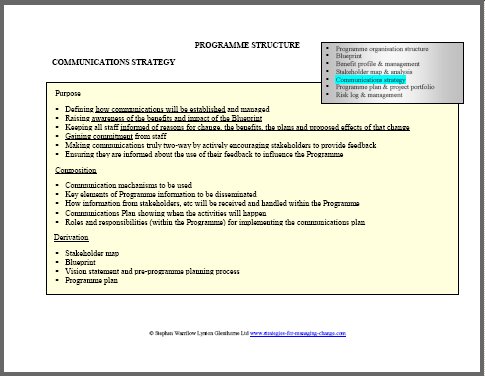
Ensuring effective two way communication with all your programme stakeholders
"What can I do to get them 'on side'"?
A good
Communication Strategy
is at the heart of any successful change process. The more change there is going to be then the greater the need - and especially about the reasons, the benefits, the plans and proposed effects of that change.
It is important that an effective communication strategy is defined and actioned as soon as possible and then properly maintained for the duration of the programme.
The key questions that you need to address:
What are the objectives?
What are the key messages?
Who are you trying to reach?
What information will be communicated?
When will information be disseminated, and what are the relevant timings?
How much information will be provided, and to what level of detail?
What mechanisms will be used to disseminate information?
How will feedback be encouraged?
What will be done as a result of feedback?
The 5 guiding principles:
A clear message
A message that addresses the emotions
The right message to the right people
A timely message
A mechanism for responding to feedback
The objectives of the communication strategy are as follows:
Building awareness of the contents, benefits and impact of the Blueprint
Gaining commitment from staff and others who will be most impacted
Delivering timely updates re progress [and delays] throughout the programme duration
Actively encouraging all stakeholders to provide feedback and ensuring they are informed about the use of their feedback to influence the programme
Ensuring all those responsible for projects have a common understanding of the wider picture [i.e. the impacts, changes and benefits involved in the programme]
Maximising the benefits obtained from the new organisational operations.
The answers to these questions will vary for different for stakeholders - and will be identified during the of Stakeholder Analysis and documented on the Stakeholder Map.
It is important to address the scale of cultural and organisational change, and also to manage expectations over an extended period.
Messages need to be consistent, simple, short and timely.
For more complex messages it may be useful to use simple statements and/or 'sound-bites as the basic foundation and then to repeat and develop these throughout the duration of the programme.
 Subscribe To This Site
 A good